1. What Is an Education Loan?
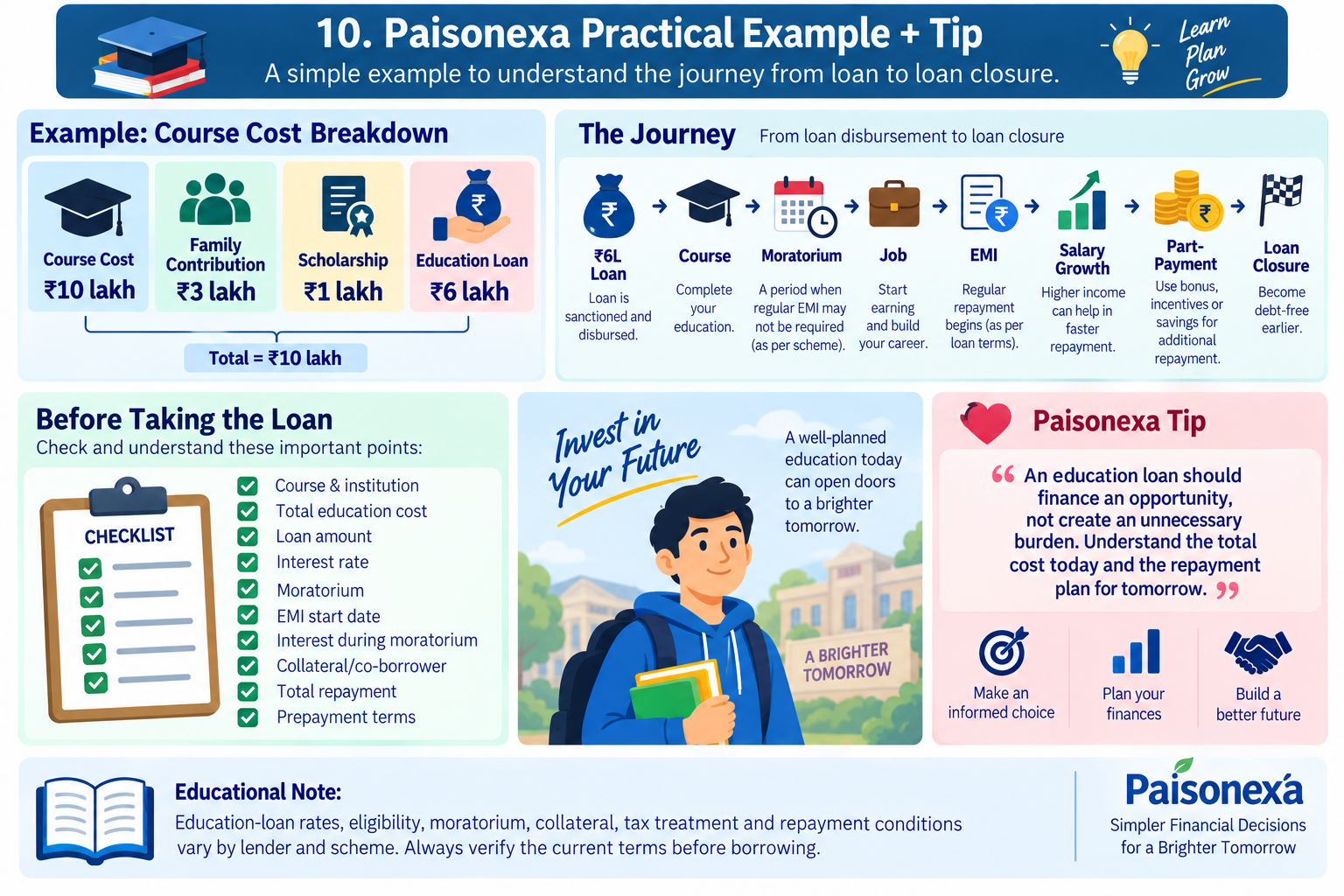
An education loan helps students and families finance eligible higher-education expenses in India or abroad, depending on the lender and scheme.
It may cover:
- Tuition fees
- Hostel expenses
- Books and study materials
- Required equipment
- Other approved education expenses
Education loan can make higher education financially manageable, but it is still a debt that must be repaid.
2. Why Is an Education Loan Useful?
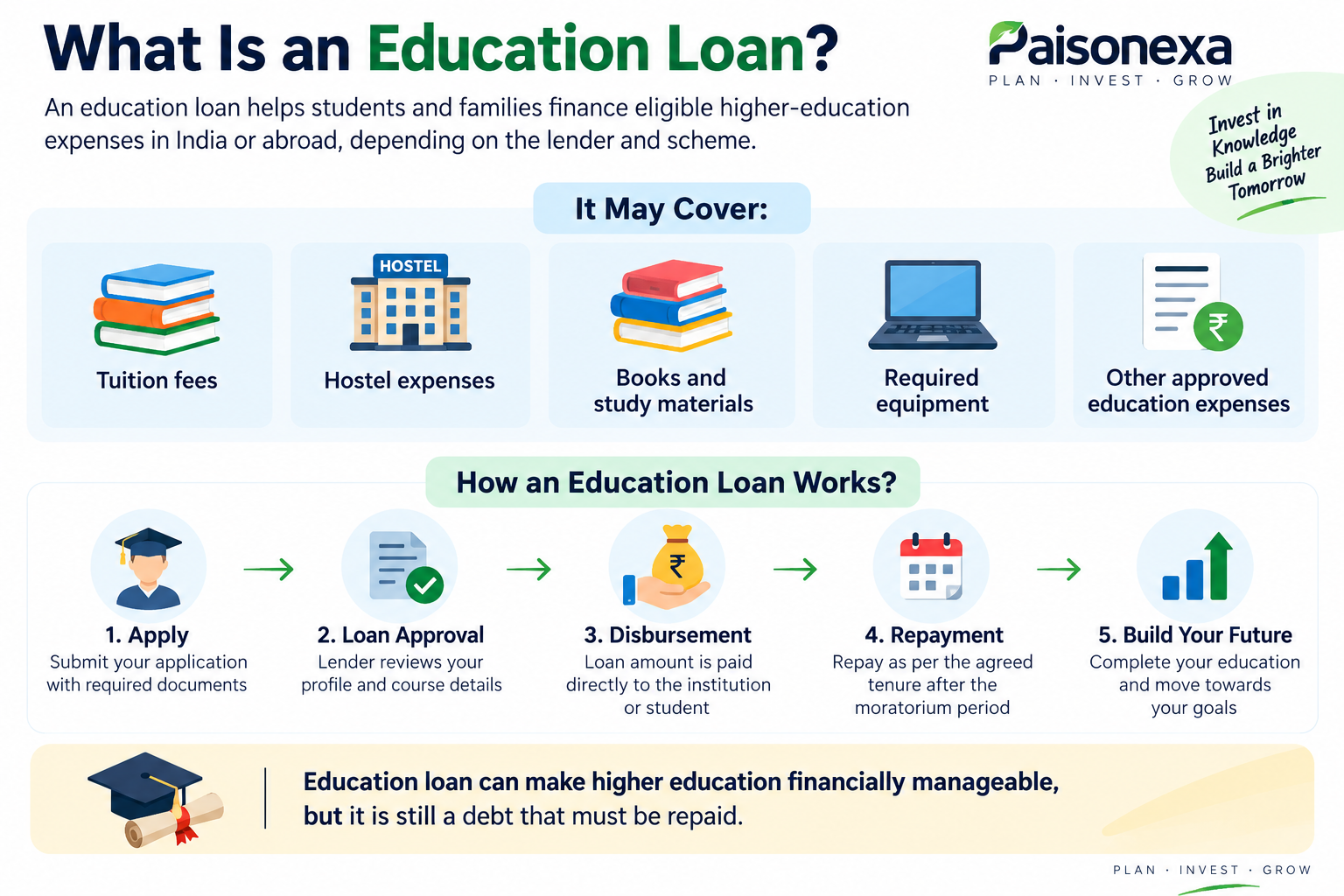
An education loan can help when paying the entire course cost upfront would put pressure on family savings.
It may help a student:
- Pursue a professional course
- Study at a reputed institution
- Finance eligible overseas education
- Preserve some savings for emergencies
- Spread the education cost over time
Example
Course Cost = ₹8 lakh
Family Contribution = ₹3 lakh
Education Loan = ₹5 lakh
The student can finance the remaining eligible cost through the loan, subject to lender approval.
The expected career benefit should justify the total cost of borrowing.
3. How Does an Education Loan Work?
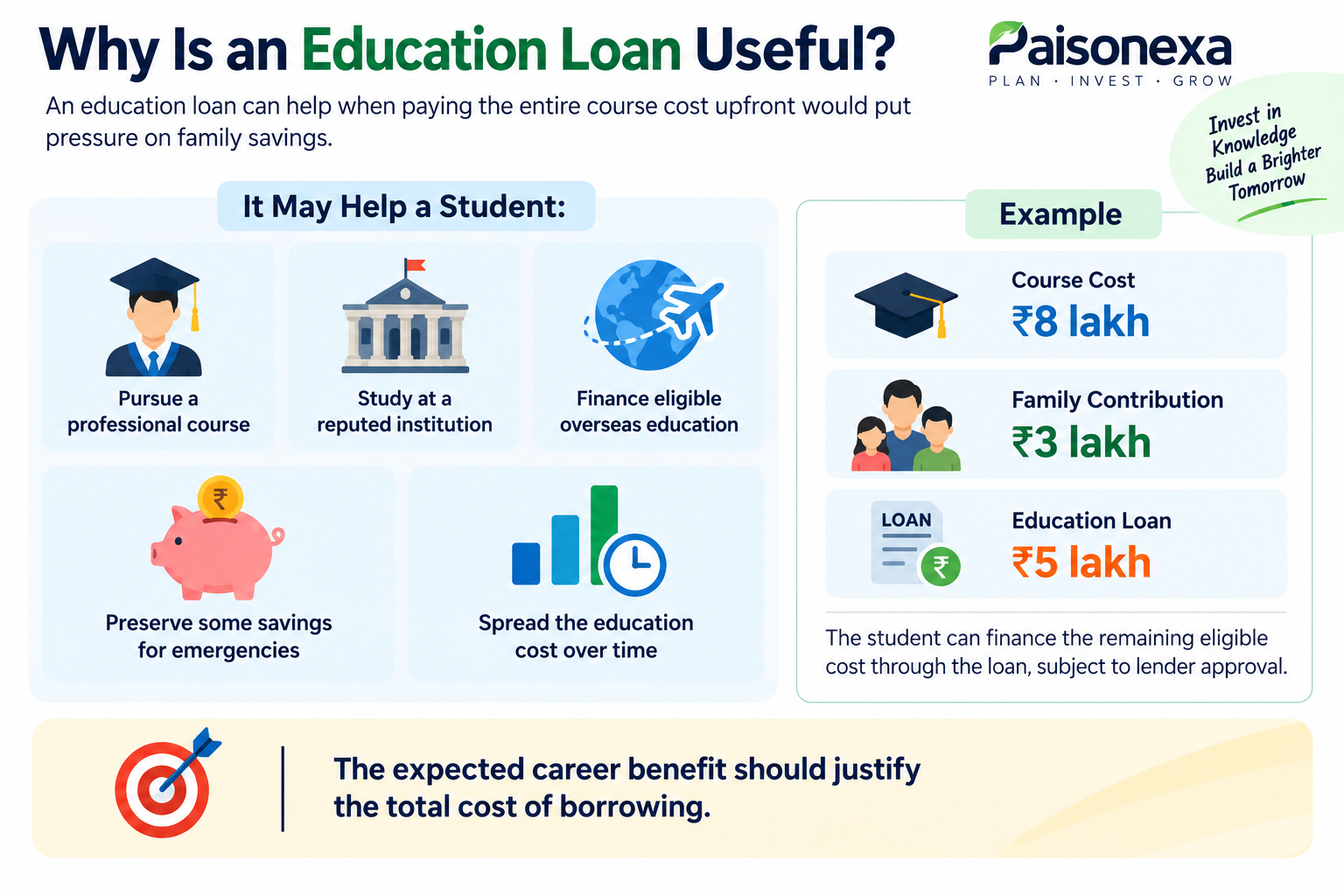
The basic journey is:
Admission → Loan Application → Assessment → Sanction → Disbursement → Study Period → Moratorium → EMI Repayment
The lender may consider:
- Course and institution
- Student’s academic profile
- Education cost
- Co-borrower
- Repayment capacity
- Credit profile
- Collateral requirements, where applicable
The loan may be disbursed according to the institution’s fee requirements.
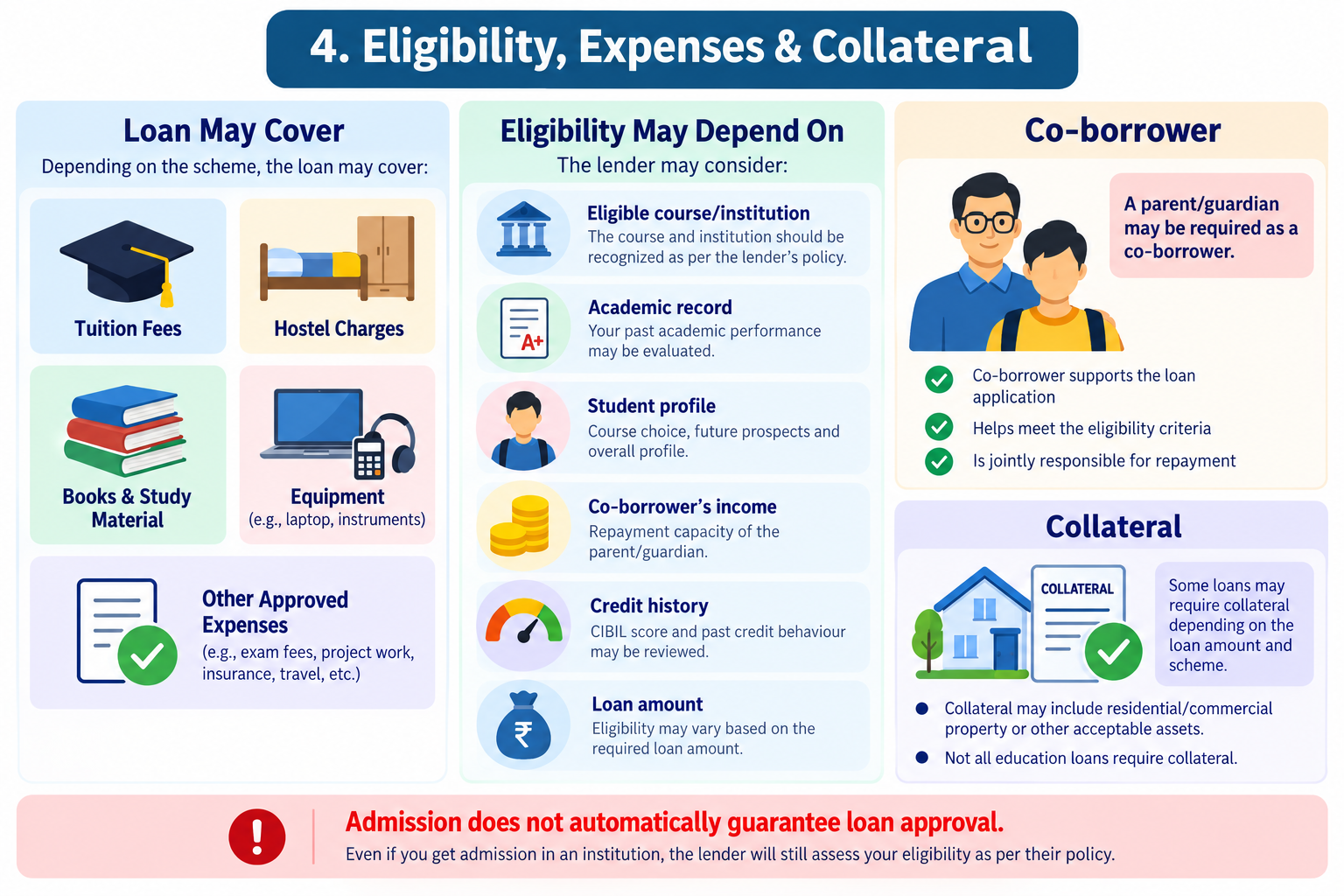
4. Eligibility, Expenses & Collateral
Depending on the scheme, the loan may cover:
Tuition + Hostel + Books + Equipment + Other approved expenses
Eligibility may depend on:
- Eligible course/institution
- Academic record
- Student profile
- Co-borrower’s income
- Credit history
- Loan amount
A parent/guardian may be required as a co-borrower.
Some loans may require collateral depending on the loan amount and scheme.
Admission does not automatically guarantee loan approval.
5. Interest Rate & Moratorium
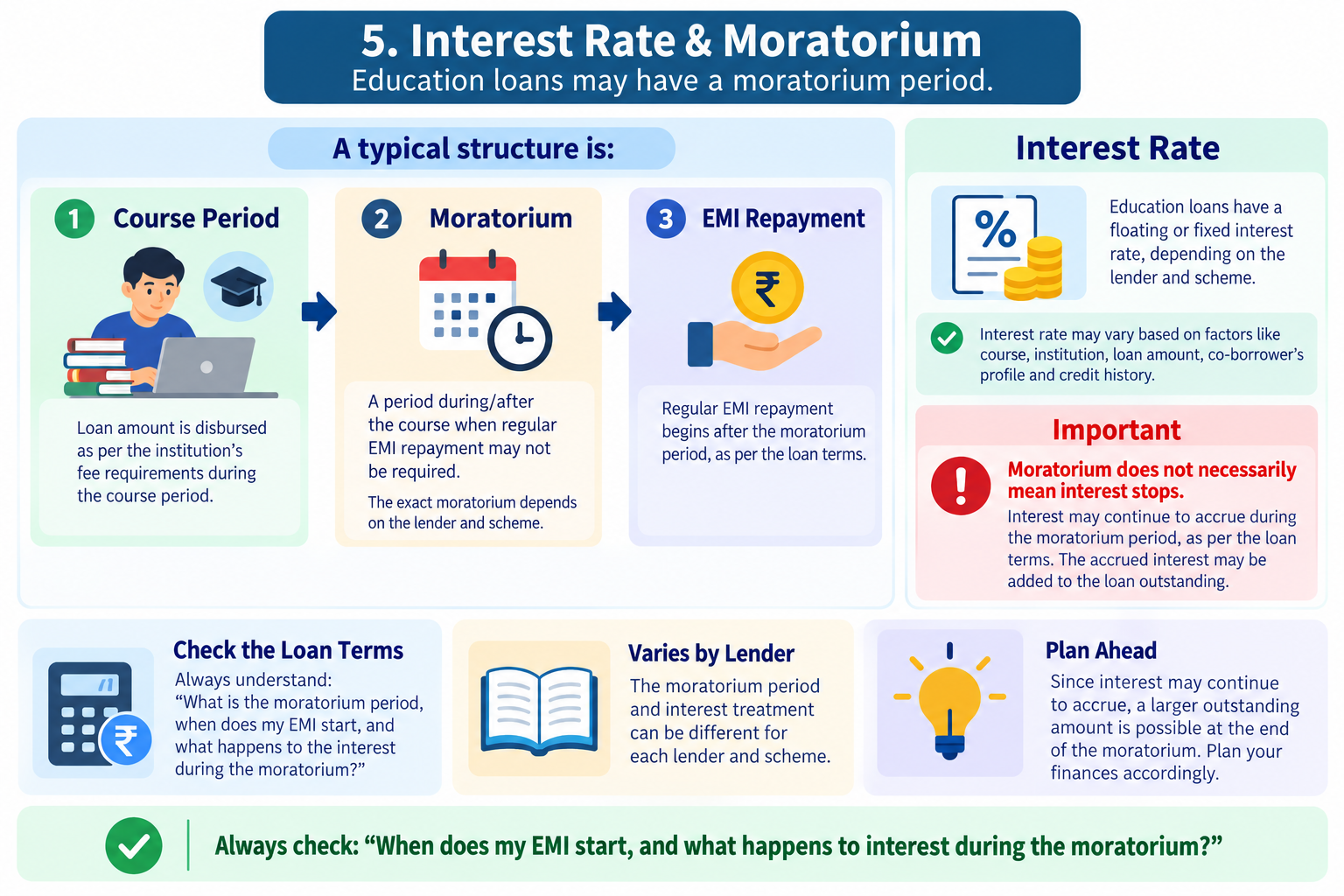
Education loans may have a moratorium period.
A typical structure is:
Course Period → Moratorium → EMI Repayment
The exact moratorium depends on the lender and scheme. Some schemes may provide a period after course completion before regular repayment begins.
Important:
Moratorium does not necessarily mean interest stops.
Interest may continue to accrue according to the loan terms.
Always check: “When does my EMI start, and what happens to interest during the moratorium?”
6. After Education — When Does EMI Start?
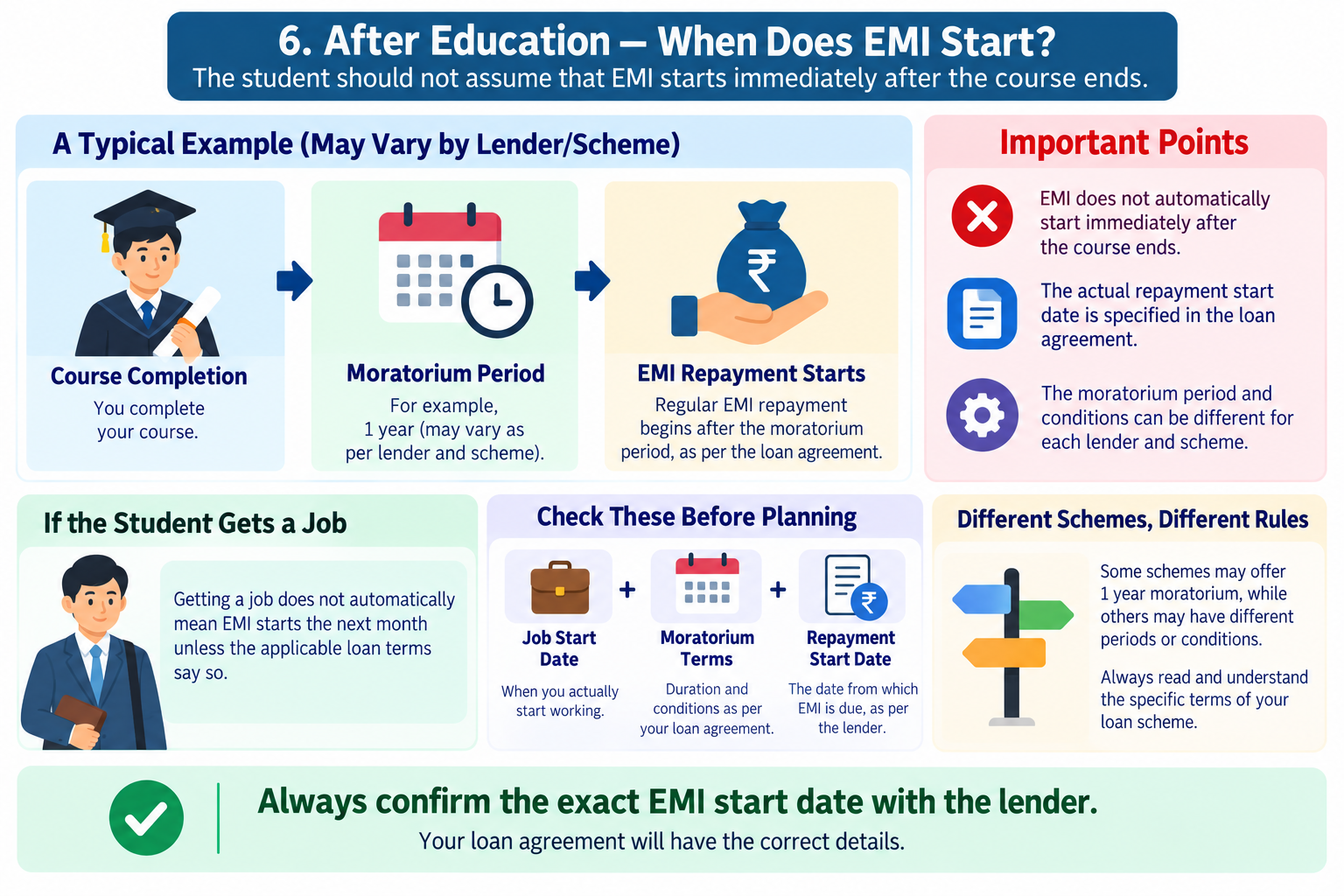
The student should not assume that EMI starts immediately after the course ends.
The actual repayment start date is specified in the loan agreement and depends on the lender/scheme.
For example, a scheme may have:
Course Completion → One-year moratorium → EMI starts
Other schemes can have different conditions.
If the Student Gets a Job
Getting a job does not automatically mean EMI starts the next month unless the applicable loan terms say so.
The student should check:
Job Start Date + Moratorium Terms + Repayment Start Date
Always confirm the exact EMI start date with the lender.
7. How Can a Student Finish the Loan Faster After Getting a Job?
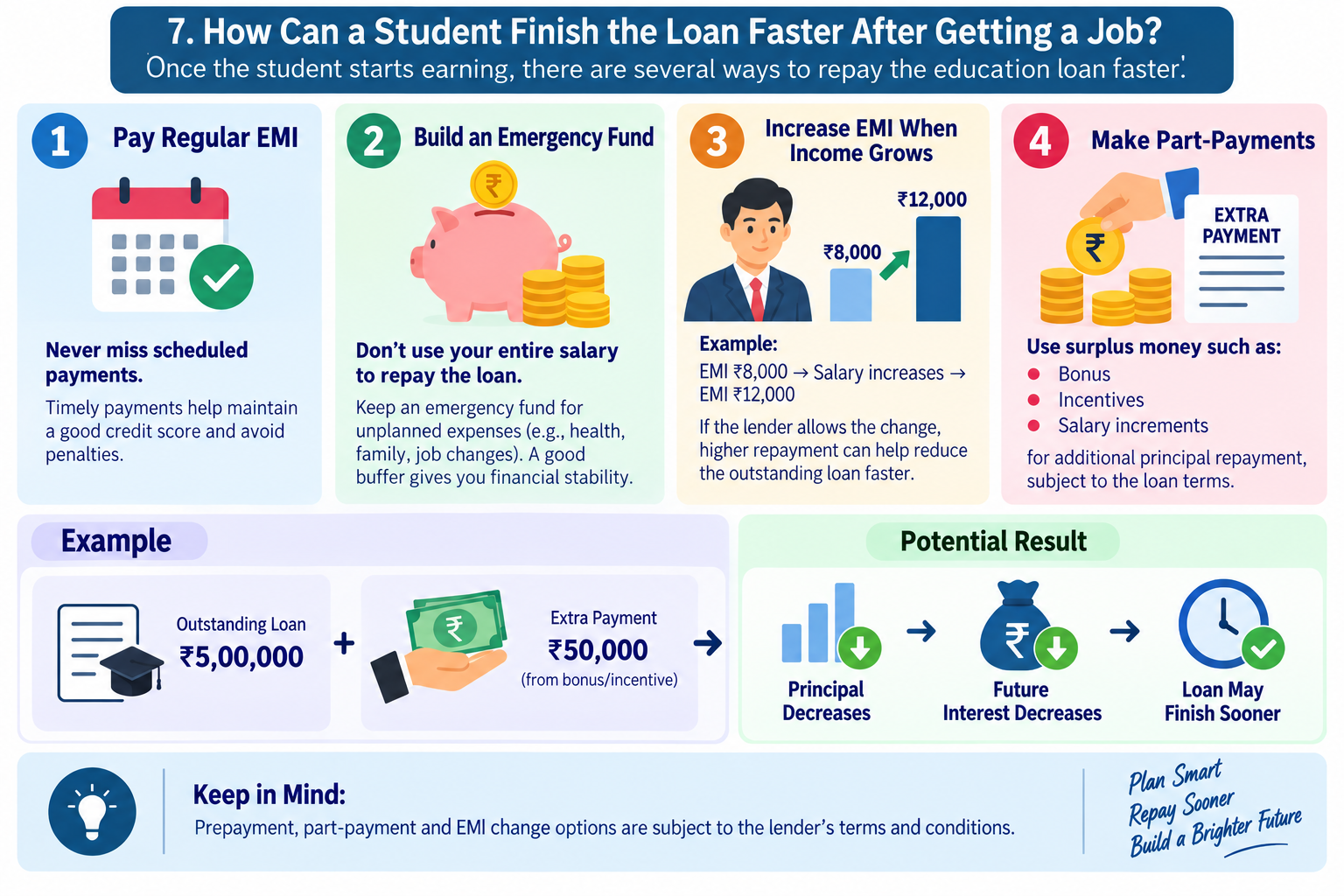
Once the student starts earning:
1. Pay Regular EMI
Never miss scheduled payments.
2. Build an Emergency Fund
Don’t use the entire salary to repay the loan.
3. Increase EMI When Income Grows
Example:
EMI ₹8,000 → Salary increases → EMI ₹12,000
If the lender allows the change, higher repayment can help reduce the outstanding loan faster.
4. Make Part-Payments
Use surplus money such as:
- Bonus
- Incentives
- Salary increments
for additional principal repayment, subject to the loan terms.
Example
Outstanding Loan = ₹5 lakh
Extra payment = ₹50,000
Potential result:
Principal ↓ → Future Interest ↓ → Loan may finish sooner
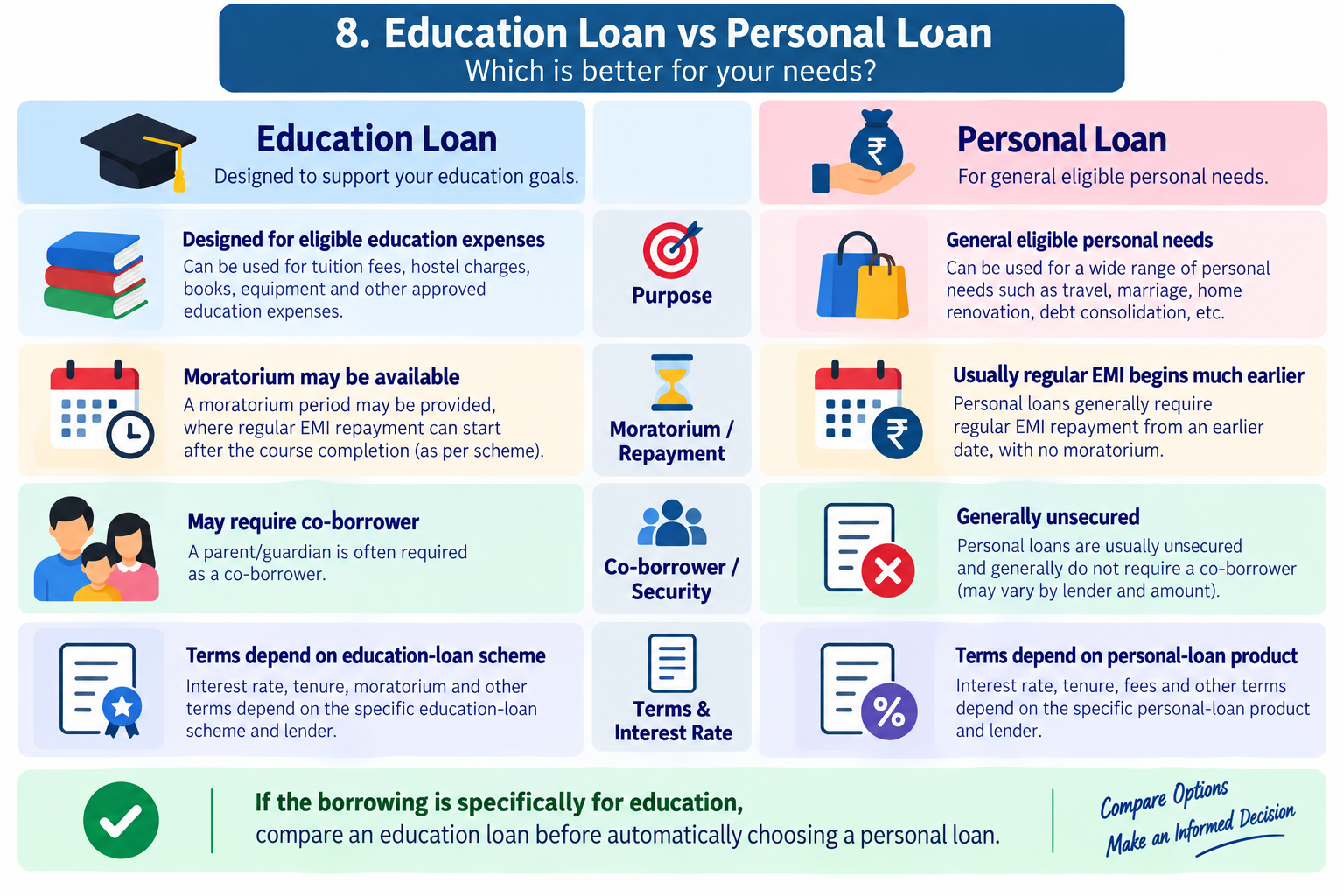
8. Education Loan vs Personal Loan
| Education Loan | Personal Loan |
|---|---|
| Designed for eligible education expenses | General eligible personal needs |
| Moratorium may be available | Usually regular EMI begins much earlier |
| May require co-borrower | Generally unsecured |
| Terms depend on education-loan scheme | Terms depend on personal-loan product |
If the borrowing is specifically for education, compare an education loan before automatically choosing a personal loan.
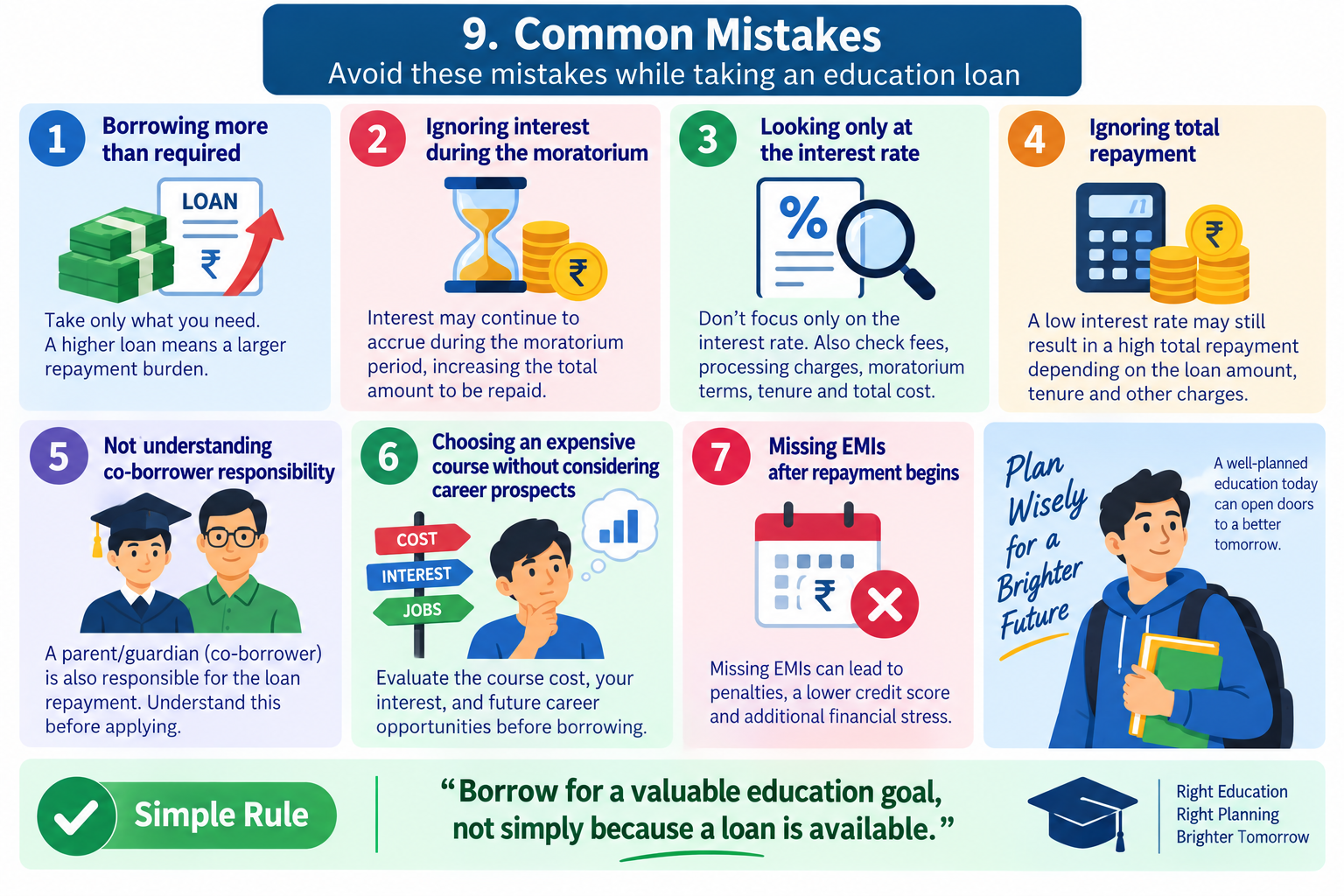
9. Common Mistakes
Avoid:
- Borrowing more than required
- Ignoring interest during the moratorium
- Looking only at the interest rate
- Ignoring total repayment
- Not understanding co-borrower responsibility
- Choosing an expensive course without considering career prospects
- Missing EMIs after repayment begins
Simple Rule
Borrow for a valuable education goal, not simply because a loan is available.
10. Paisonexa Practical Example + Tip 💙
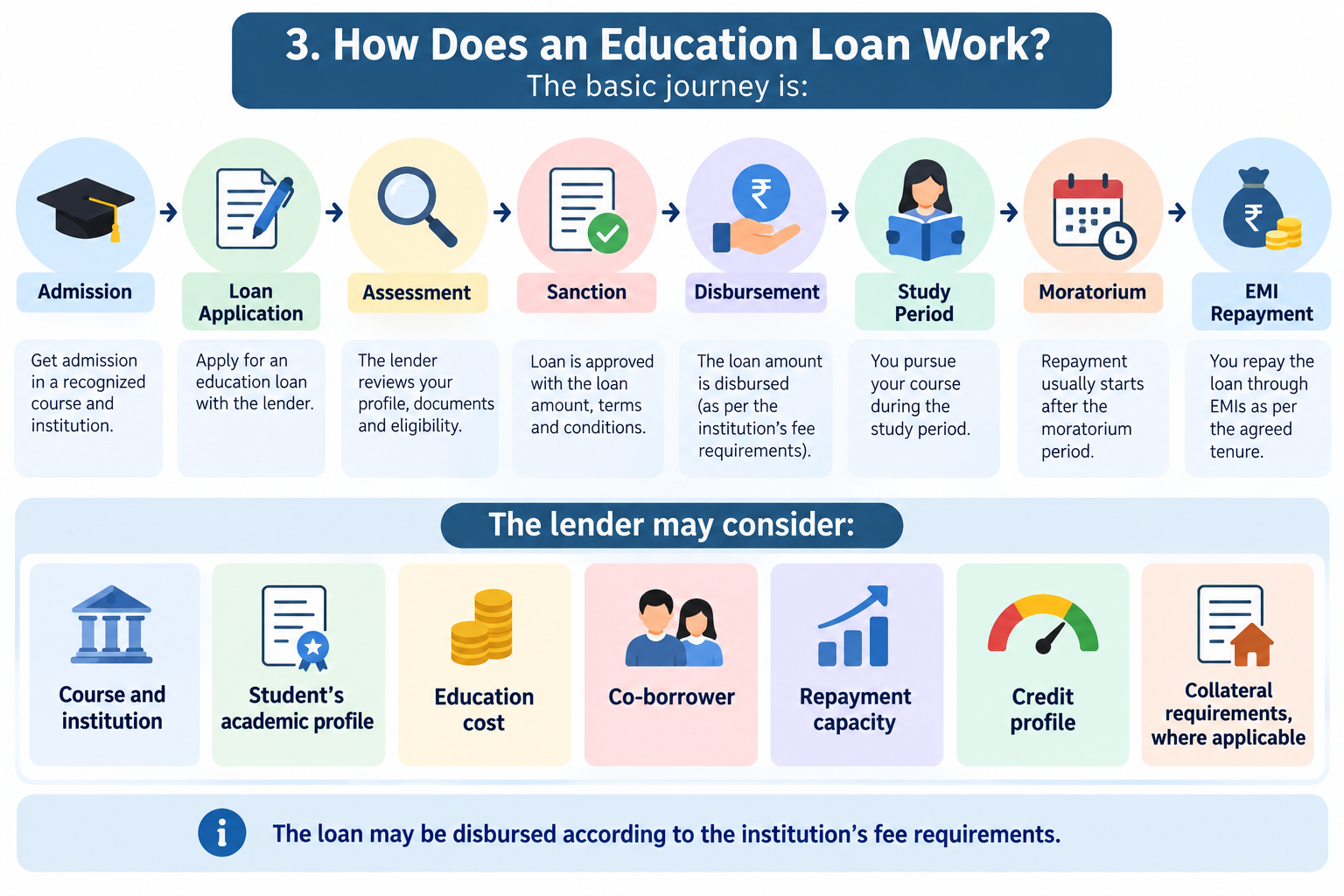
Suppose:
Course Cost = ₹10 lakh
Family Contribution = ₹3 lakh
Scholarship = ₹1 lakh
Education Loan = ₹6 lakh
Journey:
₹6L Loan → Course → Moratorium → Job → EMI → Salary Growth → Part-Payment → Loan Closure
Before Taking the Loan
☑ Course & institution
☑ Total education cost
☑ Loan amount
☑ Interest rate
☑ Moratorium
☑ EMI start date
☑ Interest during moratorium
☑ Collateral/co-borrower
☑ Total repayment
☑ Prepayment terms
💙 Paisonexa Tip
An education loan should finance an opportunity, not create an unnecessary burden. Understand the total cost today and the repayment plan for tomorrow.
Educational Note: Education-loan rates, eligibility, moratorium, collateral, tax treatment and repayment conditions vary by lender and scheme. Always verify the current terms before borrowing.