1. What Is a Car Loan?
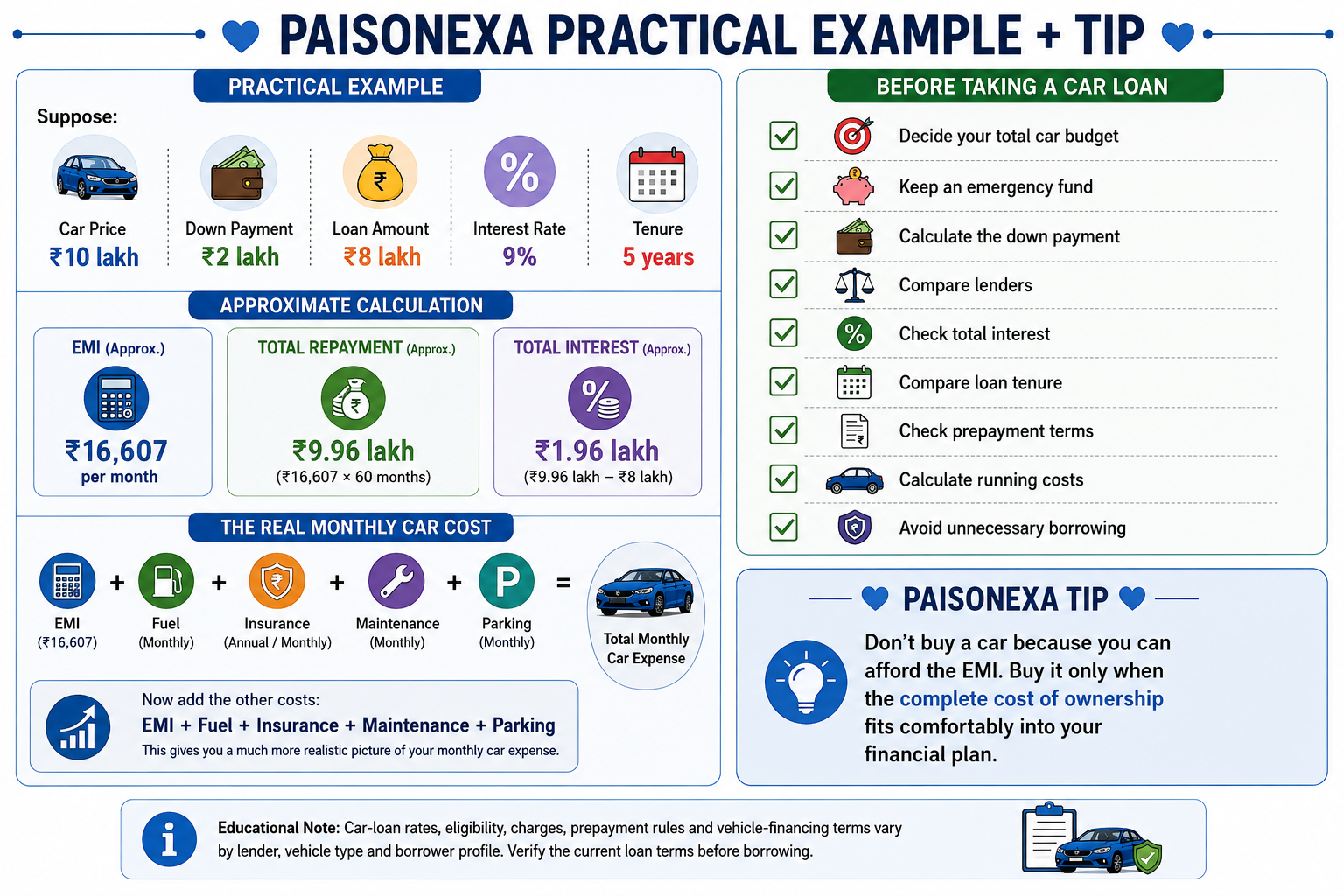
A car loan is a loan used to finance the purchase of a new or used vehicle.
The borrower generally pays part of the car’s cost as a down payment, while the lender finances the remaining eligible amount.
Simple Example
Car Price = ₹10 lakh
Down Payment = ₹2 lakh
Loan Amount = ₹8 lakh
The borrower then repays the loan through monthly EMIs.
A car loan helps you buy the vehicle sooner, but the total cost of the car becomes higher because of interest and applicable charges.
2. How Does a Car Loan Work?
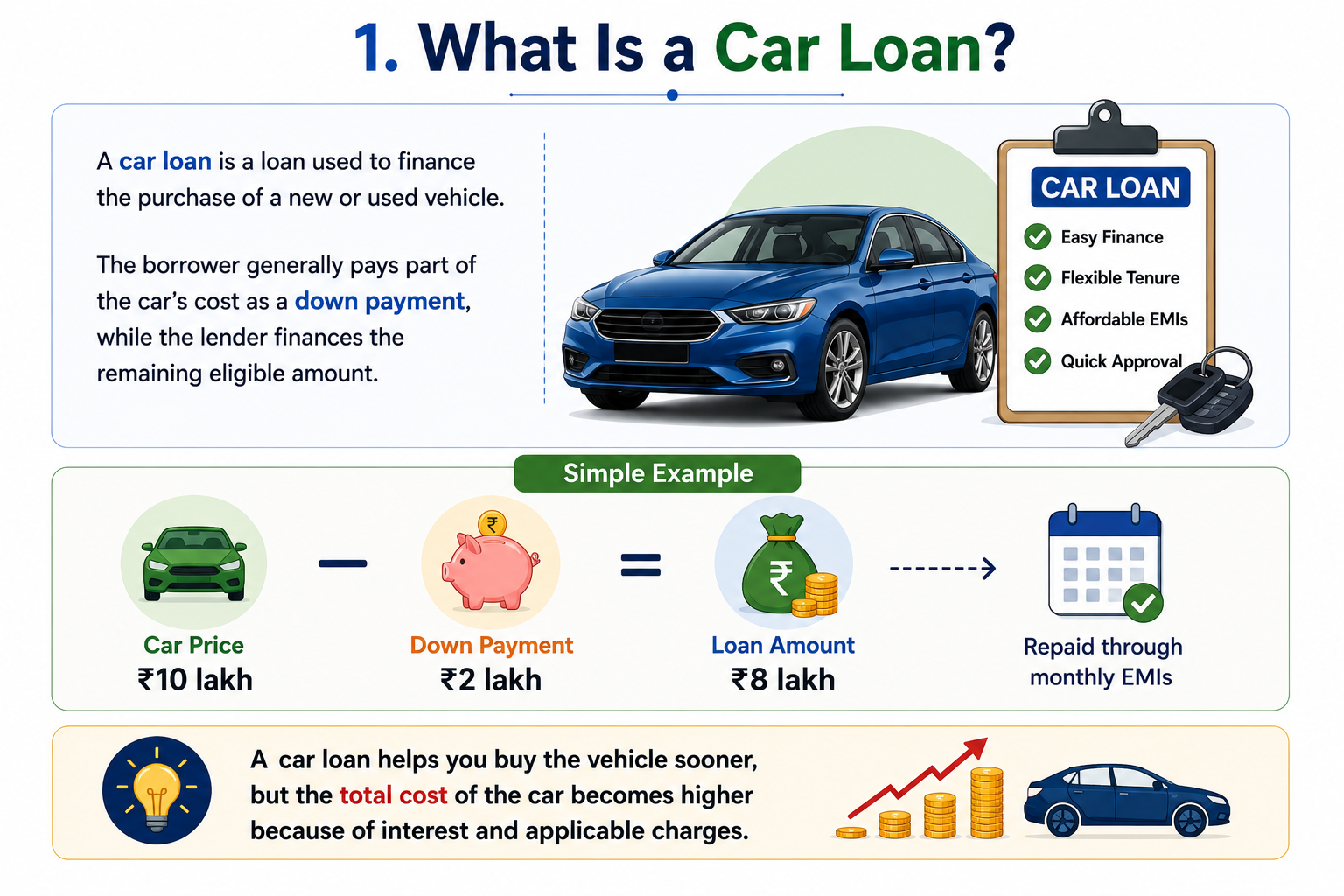
The basic process is:
Choose Car → Down Payment → Loan Application → Lender Assessment → Approval → Disbursement → EMI Repayment
Your EMI generally includes:
Principal + Interest
The EMI depends mainly on:
- Loan amount
- Interest rate
- Loan tenure
Before taking the loan, also consider:
EMI + Fuel + Insurance + Maintenance + Parking + Other Running Costs
Affording the EMI does not necessarily mean you can comfortably afford the car.
3. How Much Car Can You Afford?
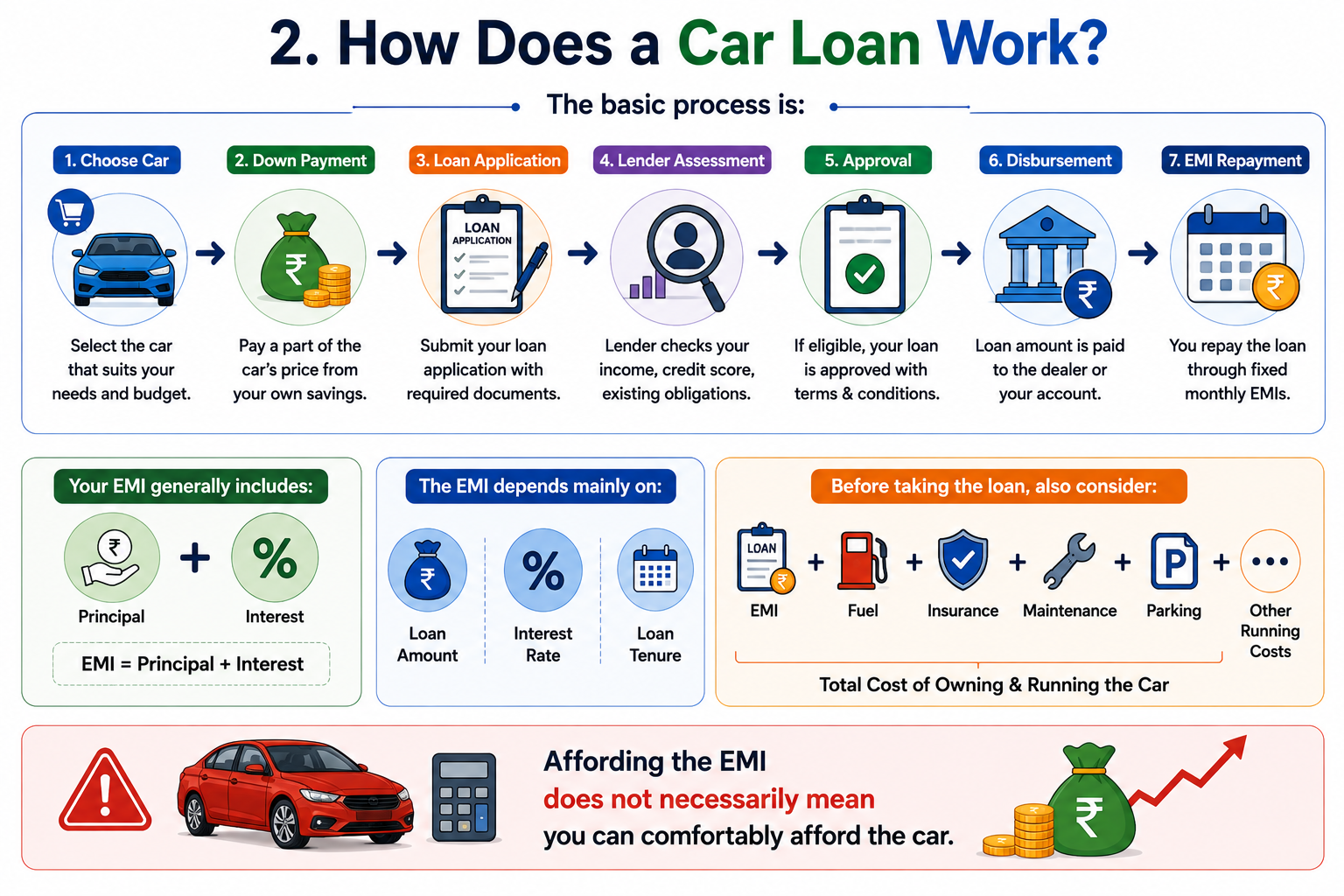
Don’t decide your car budget based only on the maximum loan offered by the lender.
Consider:
- Monthly income
- Existing EMIs
- Down payment
- Emergency fund
- Insurance
- Fuel costs
- Maintenance
- Parking
- Other financial goals
Practical Example
Suppose a car loan EMI is:
₹20,000/month
But your actual monthly car cost may be:
EMI ₹20,000 + Fuel ₹7,000 + Insurance/Maintenance ₹3,000
Approximate monthly ownership cost:
₹30,000
Calculate the total cost of owning the car, not just the EMI.
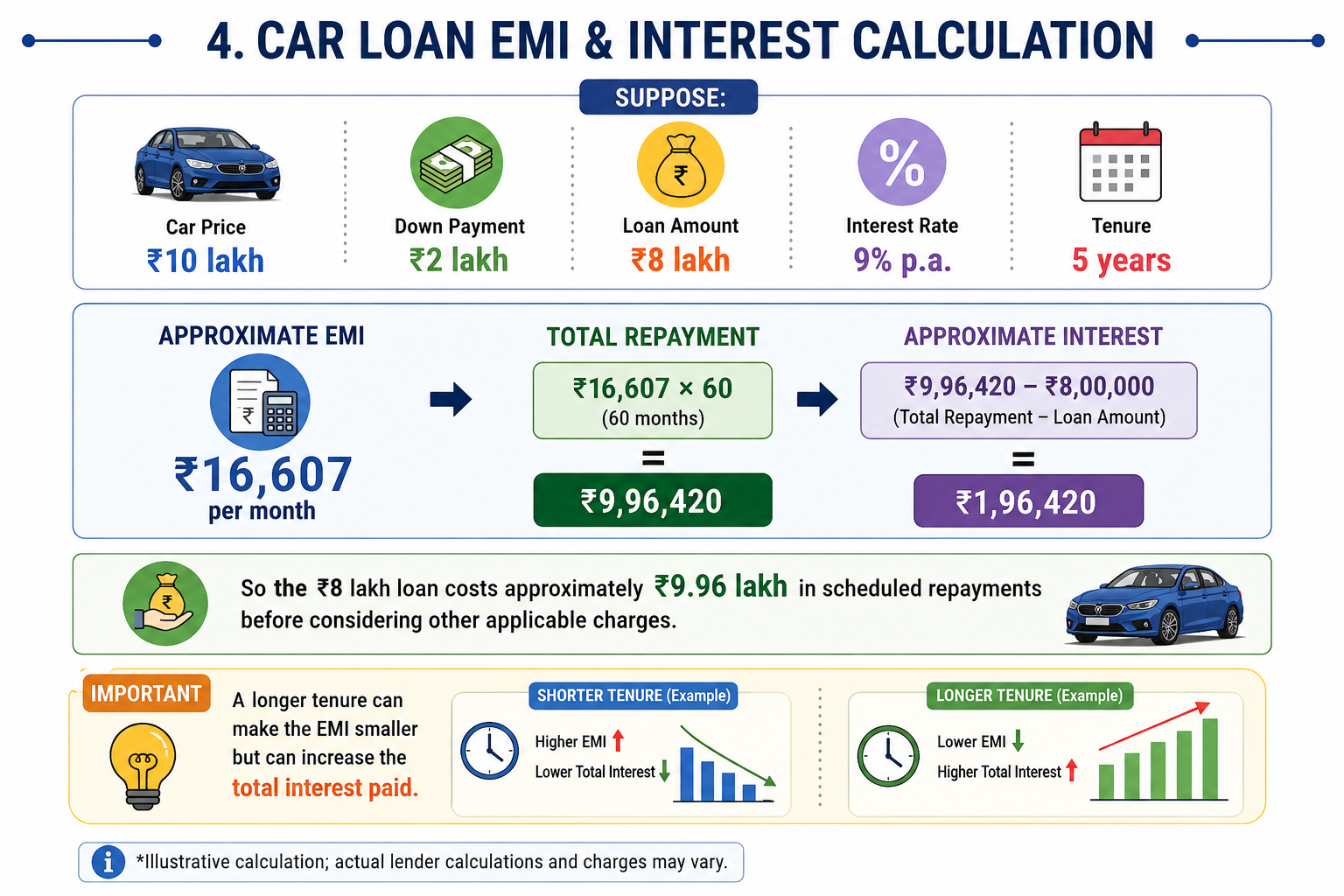
4. Car Loan EMI & Interest Calculation
Suppose:
Car Price = ₹10 lakh
Down Payment = ₹2 lakh
Loan Amount = ₹8 lakh
Interest Rate = 9% p.a.
Tenure = 5 years
Approximate EMI:
₹16,607 per month
Total repayment:
₹16,607 × 60 ≈ ₹9,96,420
Approximate interest:
₹9,96,420 − ₹8,00,000 = ₹1,96,420
So the ₹8 lakh loan costs approximately ₹9.96 lakh in scheduled repayments before considering other applicable charges.
Important
A longer tenure can make the EMI smaller but can increase the total interest paid.
Illustrative calculation; actual lender calculations and charges may vary.
5. New Car vs Used Car Loan
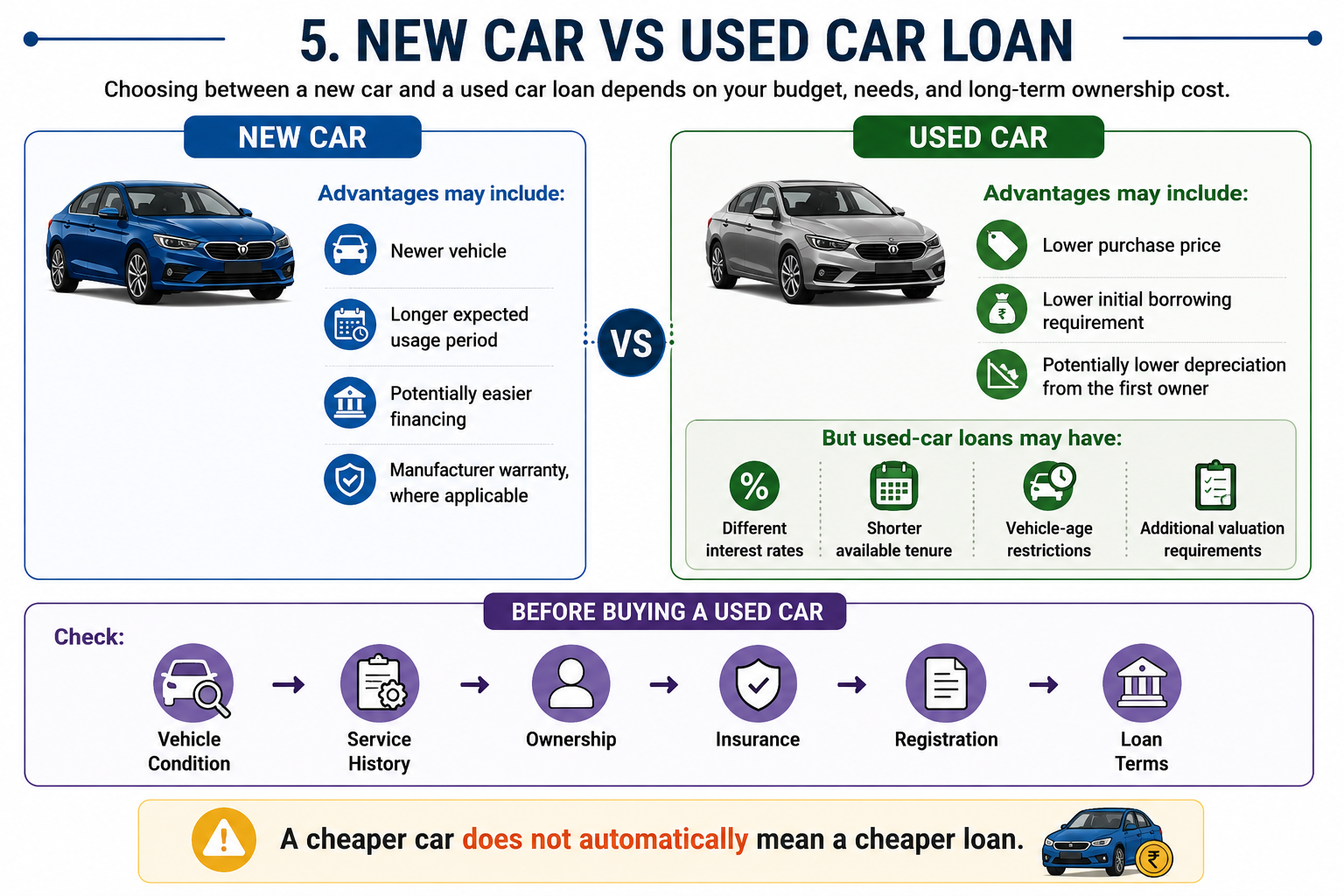
New Car
Advantages may include:
- Newer vehicle
- Longer expected usage period
- Potentially easier financing
- Manufacturer warranty, where applicable
Used Car
Advantages may include:
- Lower purchase price
- Lower initial borrowing requirement
- Potentially lower depreciation from the first owner
But used-car loans may have:
- Different interest rates
- Shorter available tenure
- Vehicle-age restrictions
- Additional valuation requirements
Before Buying a Used Car
Check:
Vehicle Condition → Service History → Ownership → Insurance → Registration → Loan Terms
A cheaper car does not automatically mean a cheaper loan.
6. Interest Rate, Tenure & Prepayment
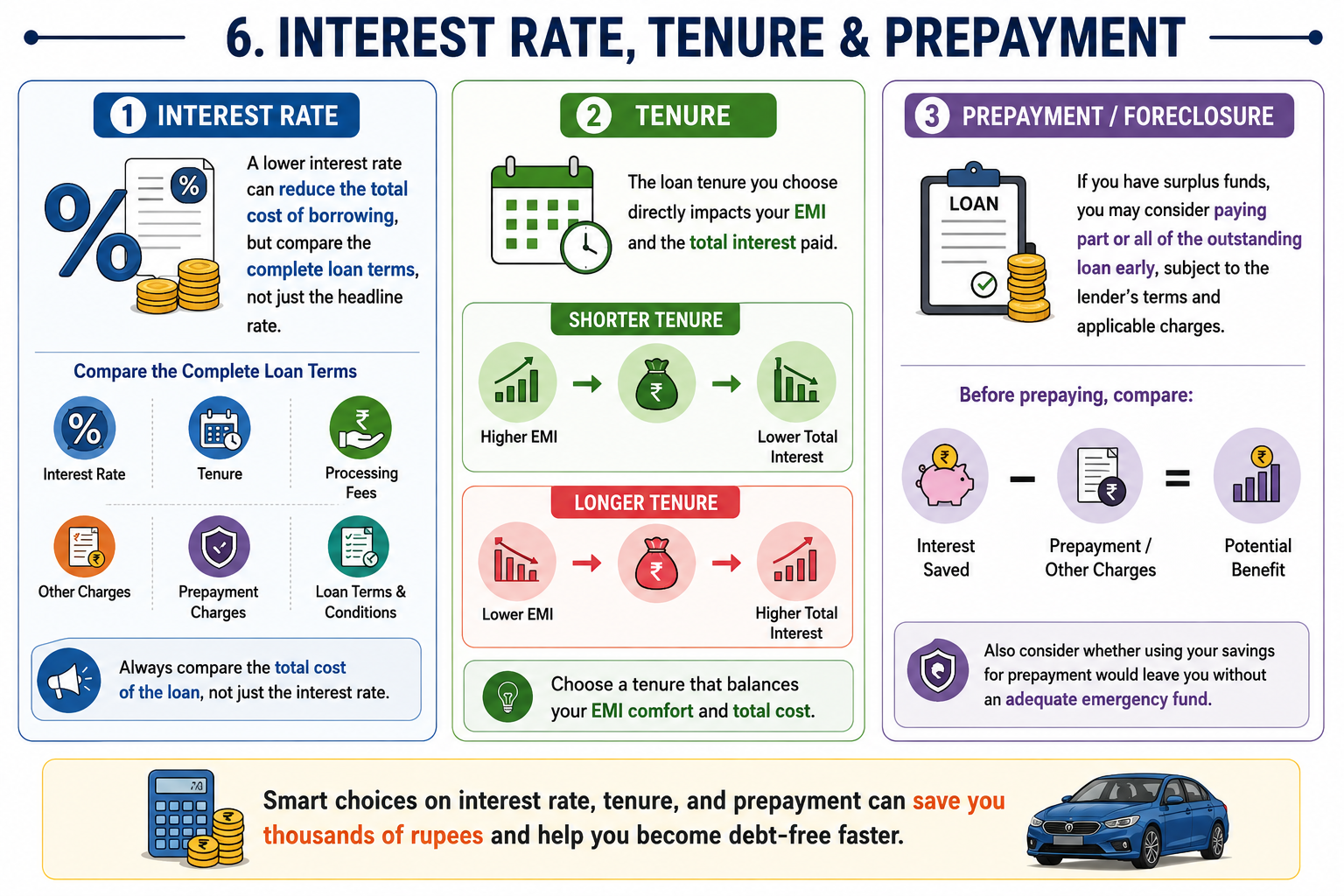
Interest Rate
A lower interest rate can reduce the total cost of borrowing, but compare the complete loan terms, not just the headline rate.
Tenure
Shorter tenure → Higher EMI → Lower total interest
Longer tenure → Lower EMI → Higher total interest
Prepayment / Foreclosure
If you have surplus funds, you may consider paying part or all of the outstanding loan early, subject to the lender’s terms and applicable charges.
Before prepaying, compare:
Interest Saved − Prepayment/Other Charges = Potential Benefit
Also consider whether using your savings for prepayment would leave you without an adequate emergency fund.
7. Common Car Loan Mistakes
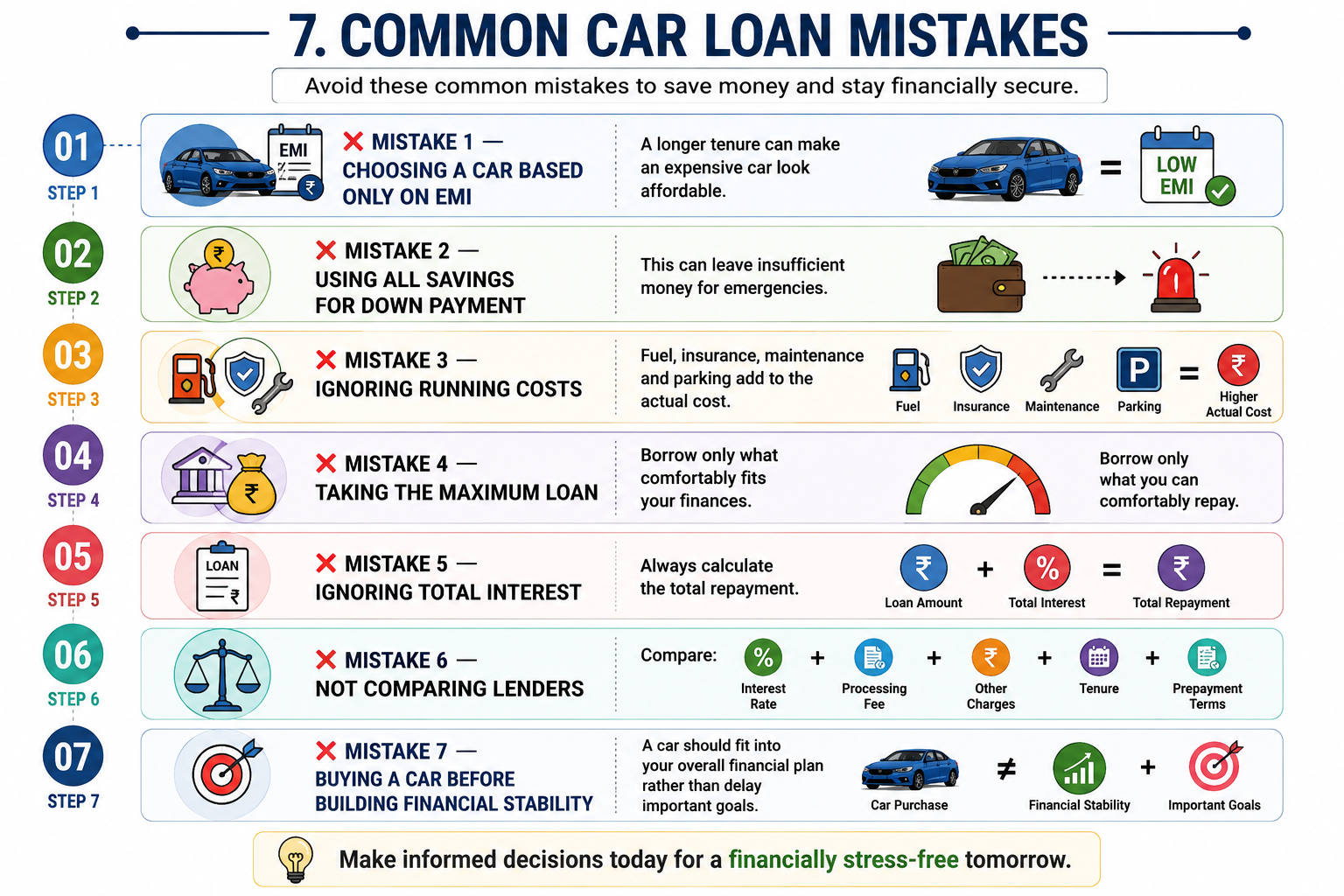
❌ Mistake 1 — Choosing a Car Based Only on EMI
A longer tenure can make an expensive car look affordable.
❌ Mistake 2 — Using All Savings for Down Payment
This can leave insufficient money for emergencies.
❌ Mistake 3 — Ignoring Running Costs
Fuel, insurance, maintenance and parking add to the actual cost.
❌ Mistake 4 — Taking the Maximum Loan
Borrow only what comfortably fits your finances.
❌ Mistake 5 — Ignoring Total Interest
Always calculate the total repayment.
❌ Mistake 6 — Not Comparing Lenders
Compare:
Interest Rate + Processing Fee + Other Charges + Tenure + Prepayment Terms
❌ Mistake 7 — Buying a Car Before Building Financial Stability
A car should fit into your overall financial plan rather than delay important goals.
8. Paisonexa Practical Example + Tip 💙
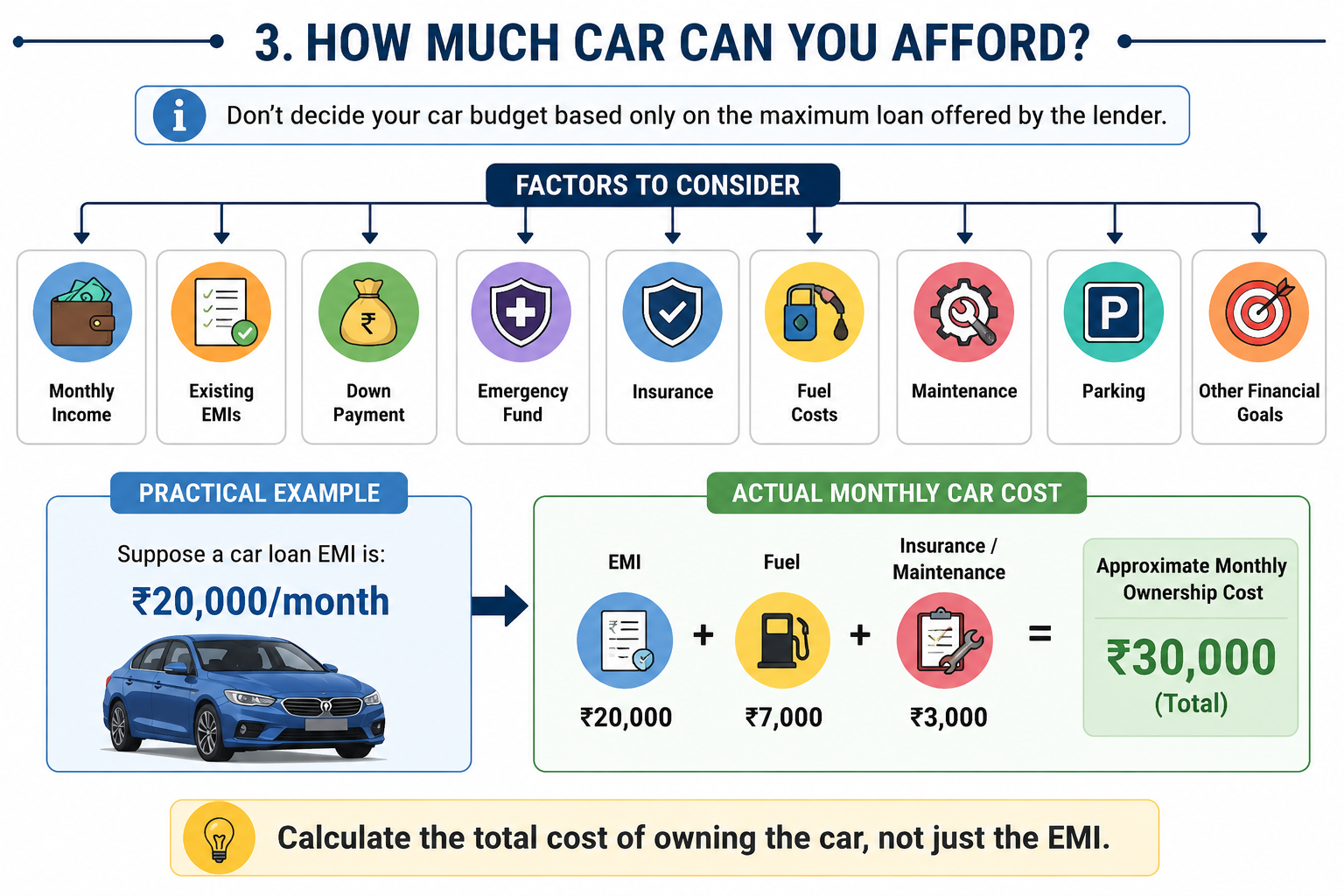
Suppose:
Car Price = ₹10 lakh
Down Payment = ₹2 lakh
Loan = ₹8 lakh
Interest Rate = 9%
Tenure = 5 years
Approximate:
EMI → ₹16,607/month
Total Repayment → ₹9.96 lakh
Interest → ₹1.96 lakh
Now add the other costs:
EMI + Fuel + Insurance + Maintenance + Parking
This gives you a much more realistic picture of your monthly car expense.
Before Taking a Car Loan
☑ Decide your total car budget
☑ Keep an emergency fund
☑ Calculate the down payment
☑ Compare lenders
☑ Check total interest
☑ Compare loan tenure
☑ Check prepayment terms
☑ Calculate running costs
☑ Avoid unnecessary borrowing
💙 Paisonexa Tip
Don’t buy a car because you can afford the EMI. Buy it only when the complete cost of ownership fits comfortably into your financial plan.
Educational Note: Car-loan rates, eligibility, charges, prepayment rules and vehicle-financing terms vary by lender, vehicle type and borrower profile. Verify the current loan terms before borrowing.